Strain guide
Maeng Da Kratom Strains: Red vs Green vs White Maeng Da Compared
Quick answer: Red vs green vs white Maeng Da comes down to the color of the leaf’s vein, which tracks with how mature the leaf was at harvest and how it was dried. White is usually described as coming from younger leaves, red from mature leaves dried longer, and green from somewhere in between. All three are the same plant, Mitragyna speciosa, so if you are brand new, start with our guide to what kratom is and then come back to pick a color.
Red, green and white Maeng Da
By Andrew KleinUpdated October 22, 202621+ only
Please read: This article is for general information only and is not medical or legal advice. Kratom is not approved by the FDA for any use. Talk to a qualified healthcare provider before using any botanical product, especially if you take medication.
The short version
Key takeaways
Same tree
Red, green and white Maeng Da all come from the same tree species. The difference is vein color, leaf maturity at harvest and drying.
A grade, not a species
“Maeng Da” is a Thai term vendors use for a premium grade of leaf. It is not a separate plant species.
Limited research
Very little published research compares vein colors. Most descriptions, including ours, come from growers, vendors and customer experience.
Preference, not promise
Customers often pick white for mornings, red for evenings and green for anytime. That is preference, not a promise.
Same serving rule
Serving guidance is the same for every color: follow the label and start small.
At a glance
Red vs Green vs White Maeng Da: Strain Chart at a Glance
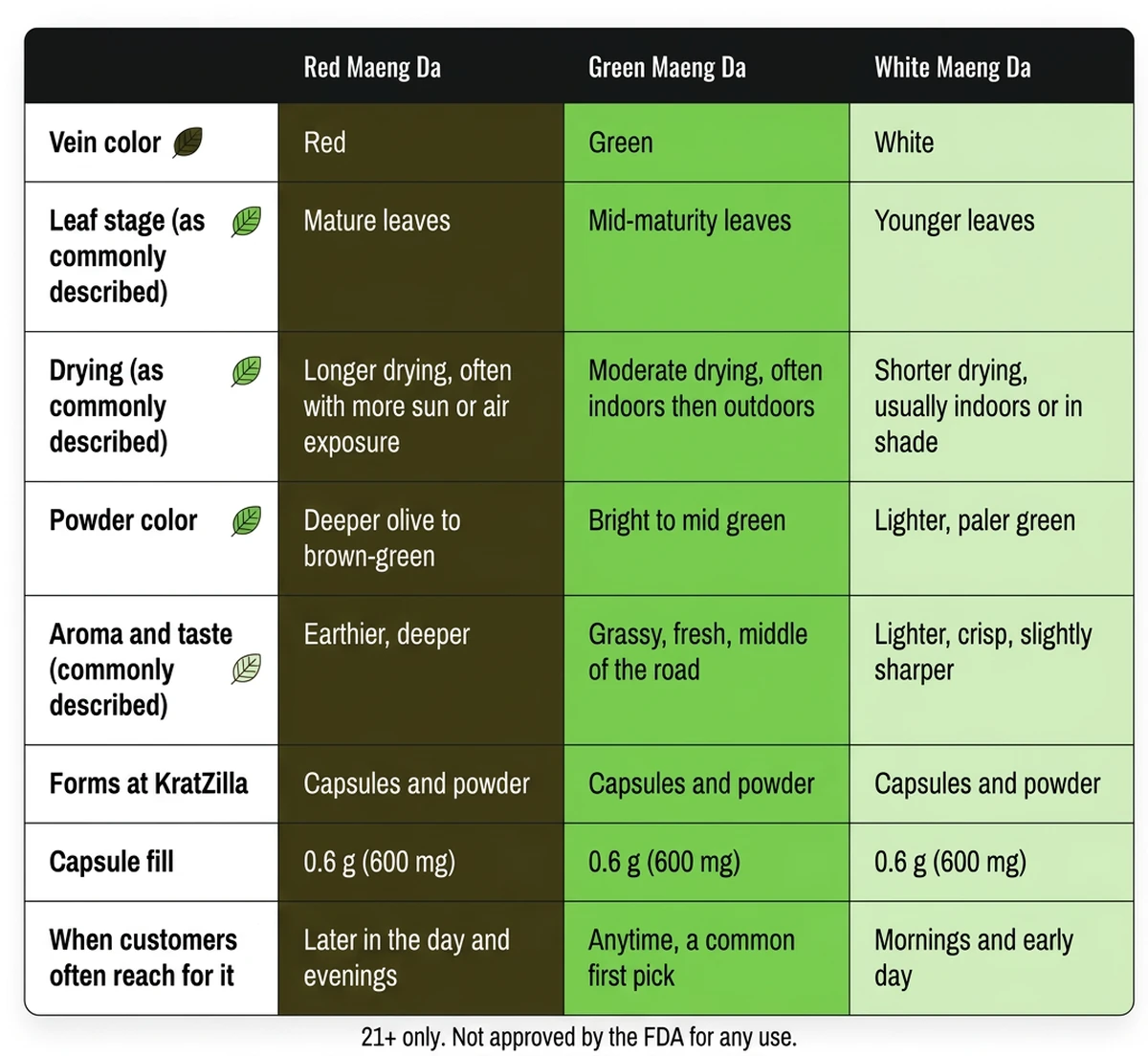
Here is the whole comparison in one table. The leaf stage and drying columns describe how vein colors are commonly explained across the kratom trade. Our supplier’s exact process for each batch is being confirmed.
Want a copy for your kitchen shelf? A printable strain chart is on the way.
Taste and aroma notes are honest generalizations. Every kratom powder is bitter and earthy, and the differences between colors are subtle. If you are hoping one color will taste like peppermint, Zilla has bad news for you.
The name
What Does “Maeng Da” Mean?
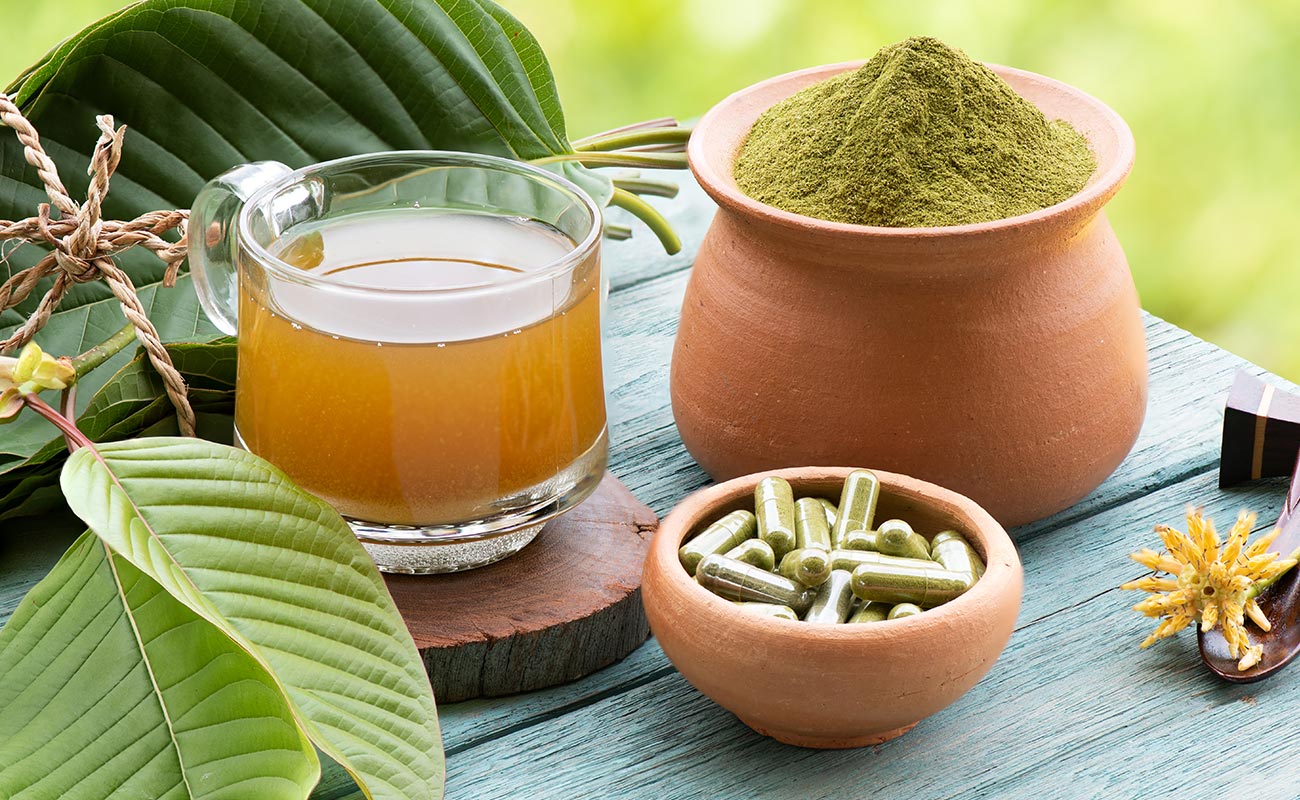
“Maeng Da” is a Thai term that kratom vendors use to signal a premium grade of leaf. You will see it on a lot of labels, and it does not refer to a different species. Every Maeng Da product, red, green or white, is still leaf from the Mitragyna speciosa tree, a member of the coffee family that grows in Southeast Asia.
What the term means in practice depends on the vendor. Some use it for leaves from select mature trees, some for a specific cultivar or grafted line, and some for a selected batch or blend. There is no official grading standard behind the name, which is why the more useful questions are where the leaf came from, how consistent it is batch to batch, and whether the vendor shares lab reports.
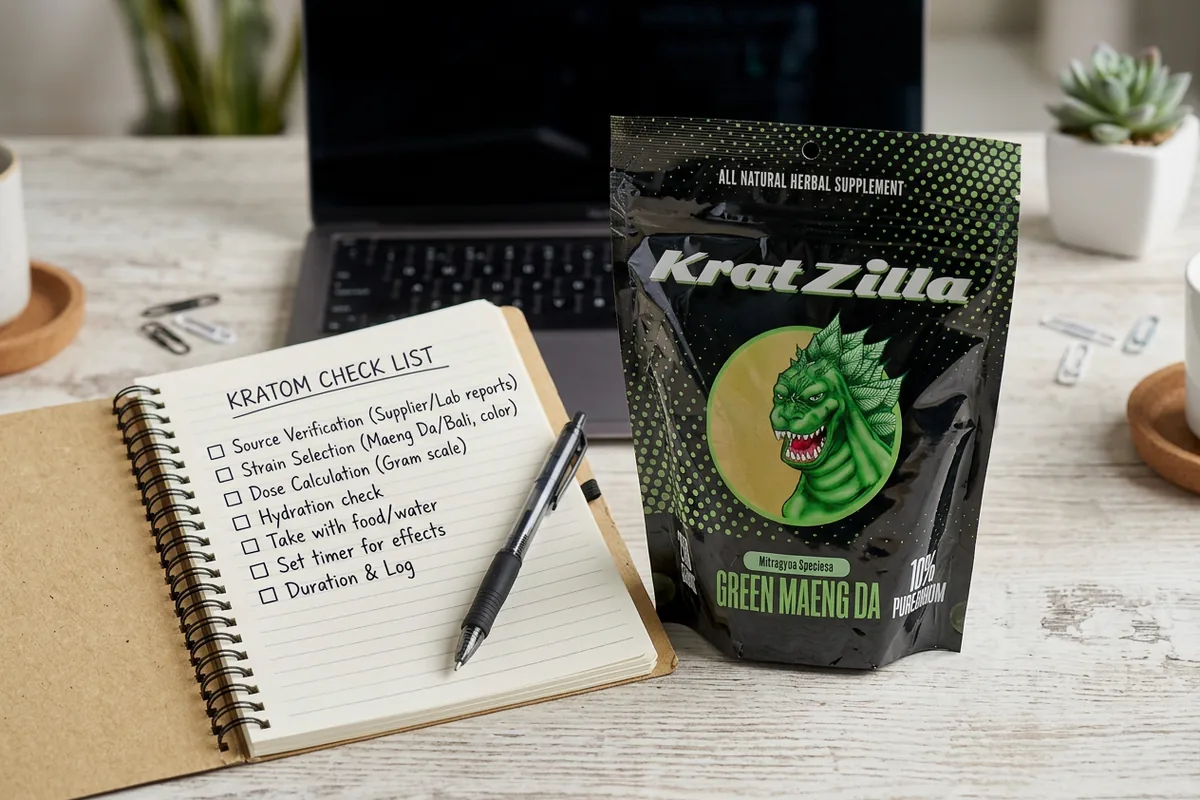
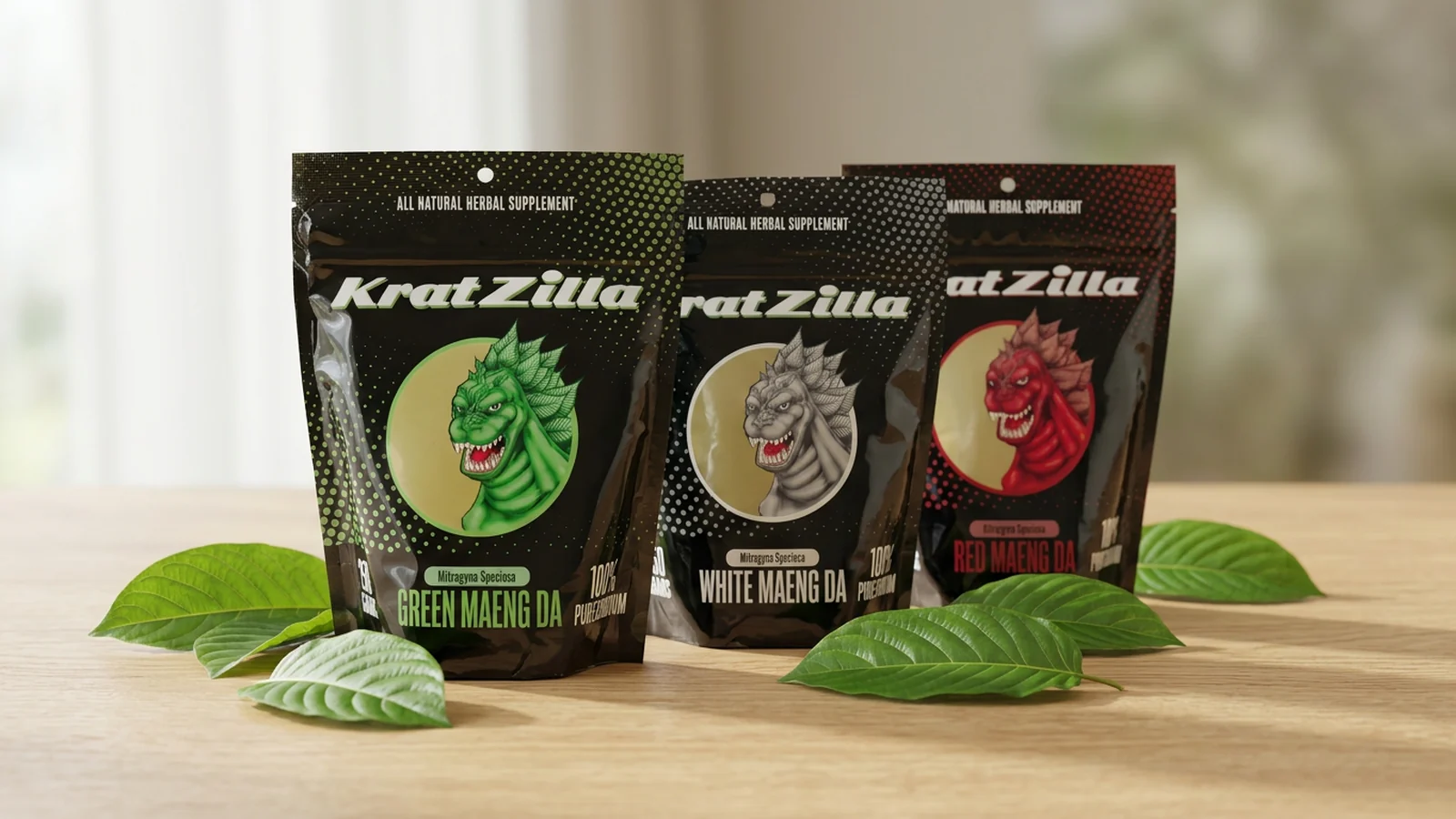
At KratZilla, Maeng Da is the only kind of kratom we sell, in three vein colors and two forms. That narrow lineup is on purpose: fewer products, each one done consistently.
The science, honestly
How Does Kratom Vein Color Happen?
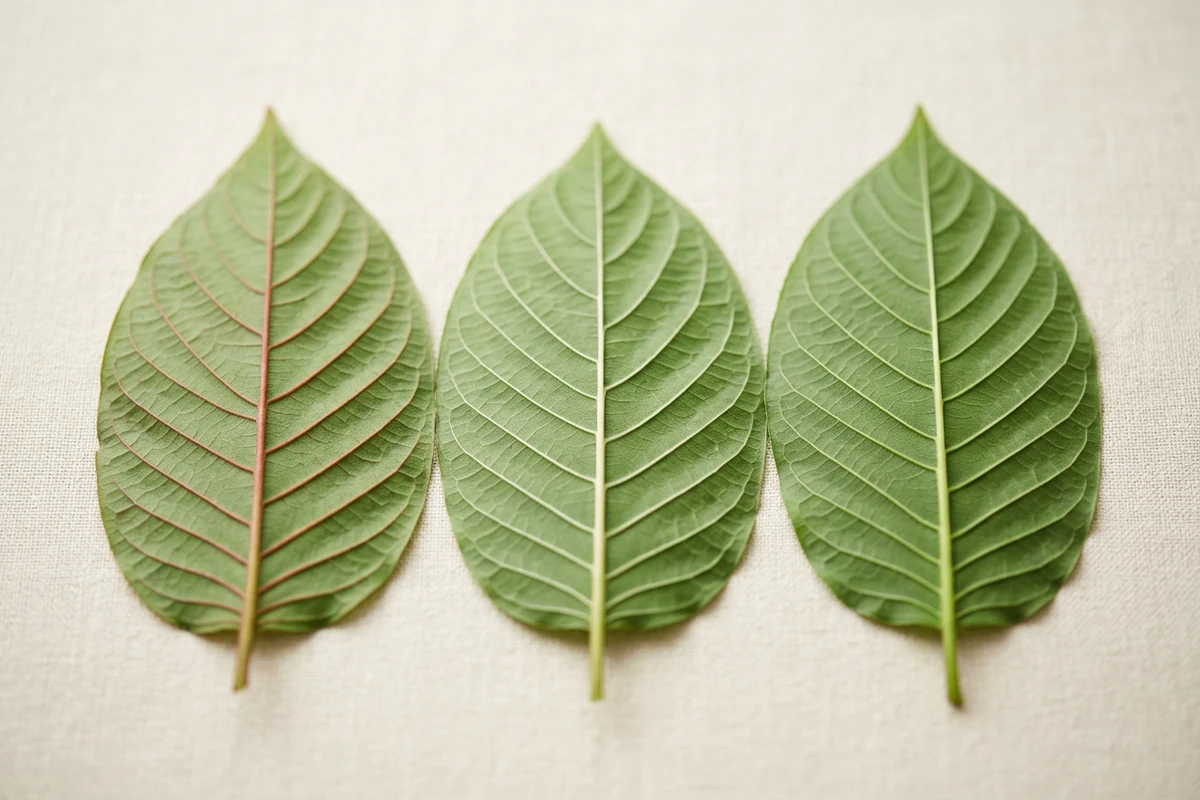
If you look closely at a fresh kratom leaf, the central vein and the smaller veins branching off it can range from reddish to green to pale white. Growers and vendors generally connect vein color to two things.
01
Leaf maturity
Younger leaves tend to show lighter, whiter veins. As the leaf ages, veins are commonly described as shifting toward green and then red. Harvest timing is the first lever a farmer pulls.
02
Drying and resting
After harvest, leaves are dried before grinding. Shorter, shaded or indoor drying is typically linked with white and green powders. Longer drying with more air or sun exposure is typically linked with red. Some producers also bag or rest leaves for a period before final drying, which tends to deepen the color further.
Here is the honest part
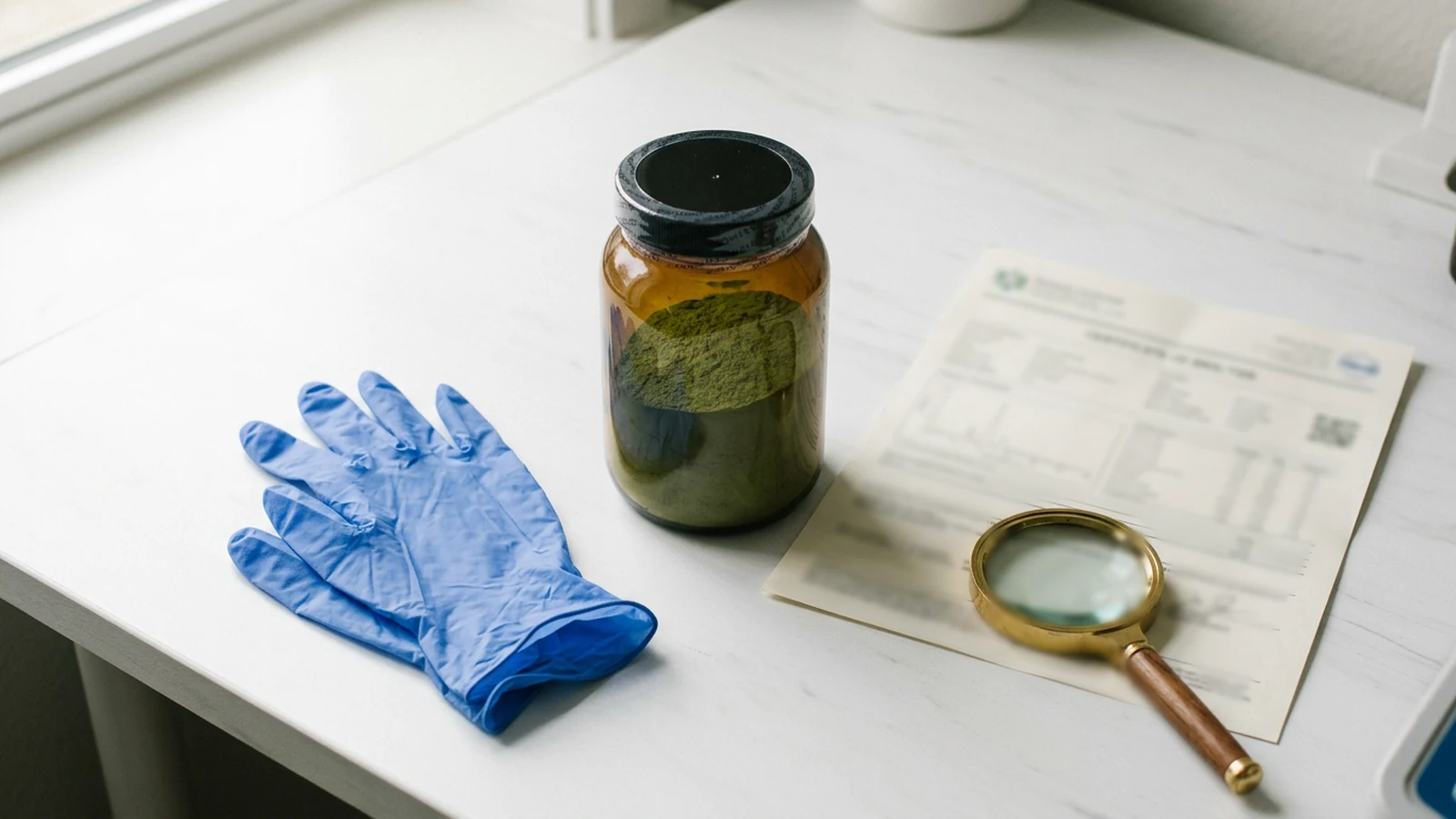
Vein color is a trade convention, not a lab classification. Published research on how vein colors differ is limited, and the National Institute on Drug Abuse describes kratom research overall as still developing. If two colors really differ in alkaloid makeup, a batch lab report is where that would show up, not a color label. We will post a COA for every batch here. More on that in our kratom lab testing guide Coming soon.
Strain profile
Red Maeng Da Kratom Profile
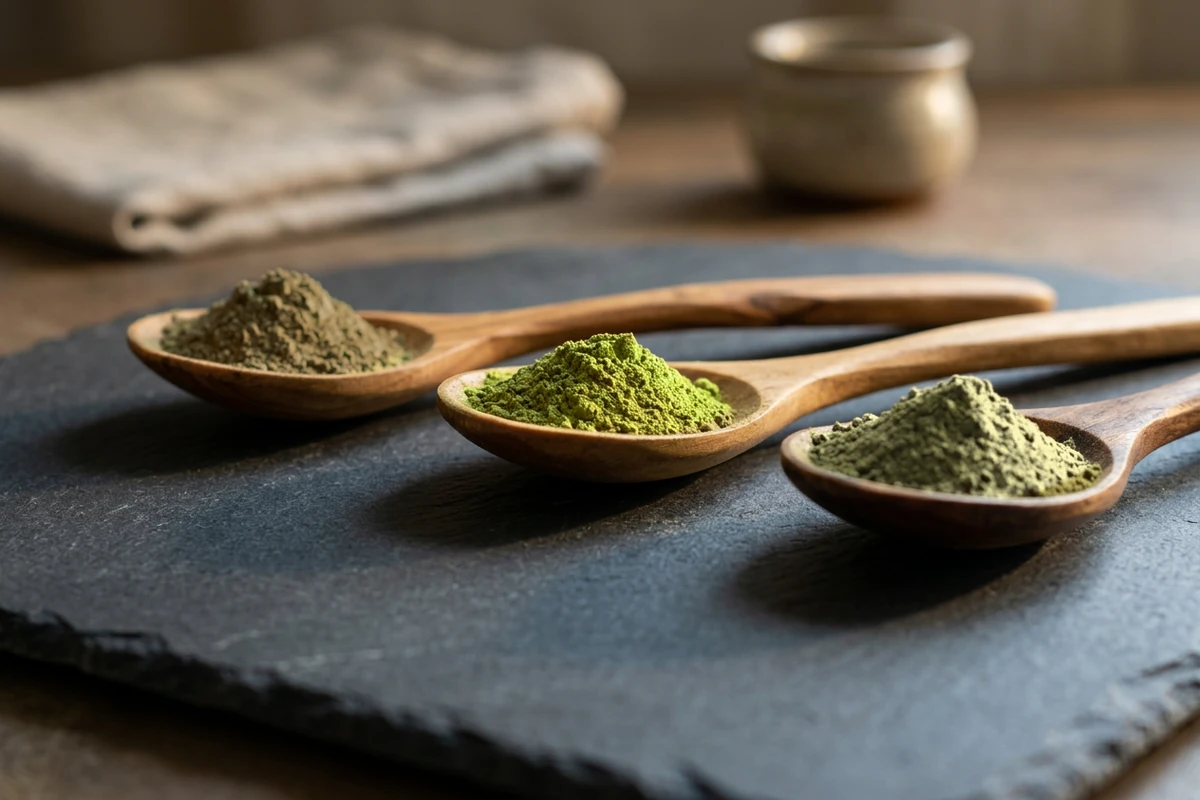
Red Maeng Da is the deepest-colored of the three. It is commonly described as coming from mature leaves that are dried longer, which gives the powder a darker olive to brown-green shade and an earthier aroma.
Strain profile
Green Maeng Da Kratom Profile
Green Maeng Da sits in the middle. It is commonly described as coming from mid-maturity leaves with a moderate drying process, so the powder is a brighter green with a fresher, grassier aroma.
Strain profile
White Maeng Da Kratom Profile
White Maeng Da is the lightest. It is commonly described as coming from younger leaves dried for a shorter time, often indoors or in shade, which keeps the powder paler with a crisper aroma.
Side by side
Head-to-Head: How Do the Maeng Da Colors Compare?
Same tree, same grade, different leaf age and drying. Here is how each pair stacks up.
Red vs White Maeng Da
These two are the furthest apart. Red is commonly linked with mature leaves and longer drying; white with younger leaves and shorter drying. You can see the gap in the powder itself: red is darker and earthier, white is paler and crisper. The most common customer pattern splits them by the clock, with white earlier in the day and red later. If you only want to try two colors, this pair gives you the clearest contrast.
Green vs White Maeng Da
Green and white are neighbors on the spectrum. Both are commonly described as lighter-processed than red, and the powders can look surprisingly similar side by side, with white a shade paler. Customers who like white in the morning sometimes keep green around for the rest of the day. The difference is subtler than red vs white, so give each one a fair, separate try before deciding.
Green vs Red Maeng Da
Green is the middle of the road; red is the deep end. Red’s longer drying gives it a darker color and earthier aroma, while green stays brighter and grassier. Many customers who start with green move to red for evenings, or keep both on hand. If you have tried green and want something different, red is the natural next stop.
Sourcing
Is Maeng Da a Blend?
It depends on who is selling it. Across the trade, “Maeng Da” can describe a single selected harvest, a particular cultivar or grafted line, or a blend of leaf chosen to hit a consistent profile. There is no single industry definition.
What we can tell you about ours
We source from a US-based supplier. Before choosing them, we sampled and compared products from several suppliers and picked the one that met our standards for quality and consistency. The leaf itself is grown in Southeast Asia.
Natural leaf only. Every KratZilla product is natural kratom leaf, ground into powder or packed into capsules. We do not sell extracts, “enhanced” kratom or concentrated 7-OH products. If you want to understand that difference, read natural kratom leaf vs 7-OHGuide coming soon.
Getting started
Which Maeng Da Color Should I Try First?
There is no right answer, only your preference. A few simple ways customers decide:
01
Start in the middle.
Green is the most common first pick because it sits between the other two.
02
Pick by time of day.
Many customers choose white for mornings and red for evenings.
03
Try two, not three.
Red and white give you the clearest contrast for comparing.
04
Change one thing at a time.
Try one color for a while before switching, so you can tell the difference.
05
Keep the serving the same.
Serving guidance does not change by color. Follow the label and start small. Our kratom serving size guide walks through label servings and conversions.
Before you order
Whatever you choose, kratom is for adults 21 and older only, and it is not right for everyone. Do not use it if you are pregnant or nursing, and talk to a healthcare professional first if you take any medication. The FDA says kratom is not approved for any medical use and cannot be lawfully marketed as a dietary supplement or food additive.
Rules also vary by location. Kratom’s legal status varies by state, county and city, and it has changed often in 2026. As of October 22, 2026, check our kratom laws by state guide Coming soon and our shipping restrictions before ordering.
Pick your form
Capsules or Powder for Each Color?
Every color comes in both forms, so you can pick the strain and the format separately.
Capsules are the easy way to compare colors at a consistent measured serving, since every capsule holds the same 0.6 g. Browse all three colors in kratom capsules, or read the full comparison in kratom capsules vs powderGuide coming soon.
FAQ
Maeng Da Strains FAQ
Keep learning
Related reading
Start here
What Is Kratom?
The plant, where it grows and the basics for first-timers.
Read the guide →
Serving size
Kratom serving size guide
Label servings, capsule conversions and why to start small.
Read the guide →
How to
How to take kratom
Capsules, powder and tea, plus storage basics.
Read the guide →
References
Sources
- U.S. Food and Drug Administration, “FDA and Kratom”: https://www.fda.gov/news-events/public-health-focus/fda-and-kratom
- National Institute on Drug Abuse, “Kratom”: https://nida.nih.gov/research-topics/kratom
Written by
Andrew Klein
[AUTHOR BIO: Andrew Klein]
Last updated: October 22, 2026
These statements have not been evaluated by the Food and Drug Administration. This product is not intended to diagnose, treat, cure, or prevent any disease. Must be 21 or older to purchase. Kratom is not approved by the FDA for any use. Do not use if pregnant, nursing, or taking medication, and consult a healthcare professional before use. Check your state and local laws before ordering.
Article Contents
- Key takeaways
- In this guide
- Red vs Green vs White Maeng Da: Strain Chart at a Glance
- What Does “Maeng Da” Mean?
- How Does Kratom Vein Color Happen?
- Red Maeng Da Kratom Profile
- Green Maeng Da Kratom Profile
- White Maeng Da Kratom Profile
- Head-to-Head: How Do the Maeng Da Colors Compare?
- Is Maeng Da a Blend?
- Which Maeng Da Color Should I Try First?
- Capsules or Powder for Each Color?
- Maeng Da Strains FAQ
- Related reading
- Ready to pick your color?
- Sources
Subscribe
Get 15% off your first order.