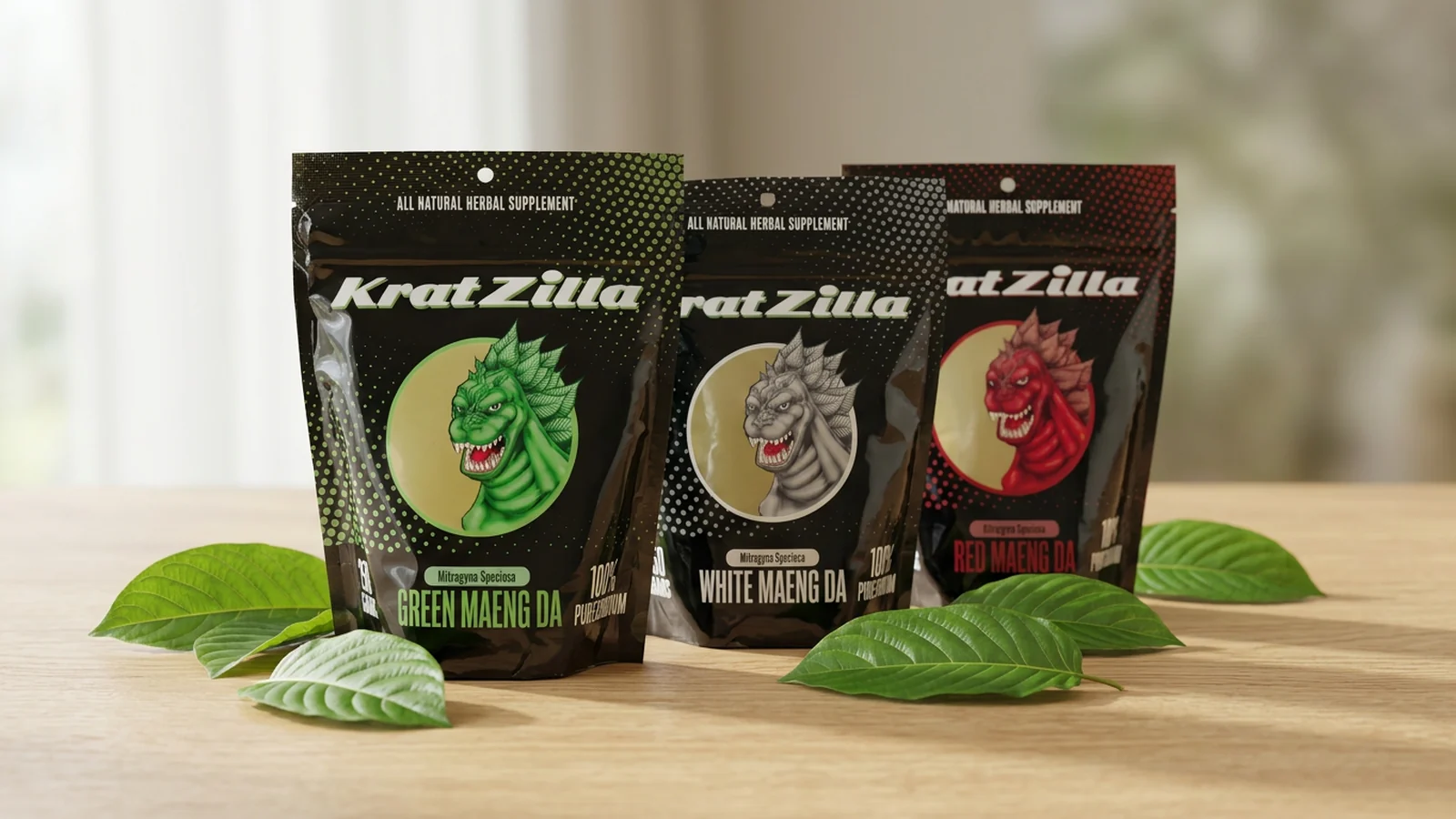
Kratom continues to gain attention as a botanical with unique, strain-specific effects. At Kratzilla, we keep it simple and strong by offering only the essentials: Red, Green, and White Maeng Da, the gold standard for consistency and potency.
This guide will help you understand the differences between these three core strains, so you can choose the right one for your goals—whether it’s to wind down, focus up, or find that sweet middle ground.
FDA Disclaimer
The information on this website is intended for general educational purposes only and does not constitute medical advice. Kratom has not been evaluated by the U.S. Food and Drug Administration (FDA) for the diagnosis, treatment, cure, or prevention of any disease. Kratom is not intended for use by individuals under the age of 21. Always consult with a qualified healthcare provider before using any botanical supplement, particularly if you are pregnant, nursing, on medication, or have a health condition. Use responsibly.

What Are Kratom Strains?
Kratom strains refer to variations of the Mitragyna speciosa leaf, each offering a unique blend of effects based on vein color, harvest timing, and drying methods. While many regional names exist, at Kratzilla, we focus on the most time-tested, reliable varieties: Red, Green, and White Maeng Da.
The differences between these strains are primarily influenced by:
- Vein Color: This reflects the maturity and alkaloid content of the leaf.
- Harvest Timing: Young vs. mature leaves offer distinct chemical profiles.
- Drying Method: Whether leaves are dried in sunlight, shade, or through specialized techniques impacts the final product.
Understanding Strain Effects
Knowing the typical effects of each kratom strain can help you choose the right one for your goals:
- Red Maeng Da: Generally calming and relaxing. Often chosen for stress relief, rest, or winding down in the evening.
- Green Maeng Da: Known for balanced effects. Ideal for daytime use, combining mood support with moderate energy and focus.
- White Maeng Da: Typically energizing and stimulating. Commonly used in the morning for productivity, alertness, or motivation.
Why Strains Differ
Even with a shared name like “Maeng Da,” effects can vary due to:
- Vein color and maturity at harvest
- Post-harvest drying techniques
- Growing conditions, including soil and climate
Choosing the Right Strain
Selecting the right strain comes down to your intended use. Whether you need calm, clarity, or a natural energy boost, matching your strain to your lifestyle makes all the difference. At Kratzilla, we keep it simple—three bold strains, one powerful plant.
Influences on Kratom Strains
Kratom strains can vary widely in their effects and properties, even within the same strain category. This variability is shaped by key factors such as leaf maturity, harvesting techniques, drying methods, and environmental conditions. Understanding these influences can help you choose a strain that aligns with your desired experience.
Leaf Maturity & Selection
The age of the kratom leaf at harvest plays a significant role in its alkaloid composition:
- Young Leaves (White Vein): Contain alkaloids that support energizing, uplifting effects.
- Mature Leaves (Green Vein): Offer a balanced alkaloid profile, combining stimulation with relaxation.
- Older Leaves (Red Vein): Tend to be rich in calming alkaloids, often used for stress relief and evening support.

Harvesting Techniques
How kratom is harvested affects quality, consistency, and potency:
- Selective Hand-Picking: Traditional methods focus on harvesting leaves at optimal maturity.
- Commercial Harvesting: Large-scale operations may use less selective practices, which can affect strain consistency.
- Harvest Timing: The schedule and frequency of harvest cycles influence alkaloid levels and strain stability.

Drying and Processing Methods
Post-harvest processing determines much of the strain’s final characteristics:
- Sun-Drying (Red Strains): Boosts alkaloids tied to relaxation and calming effects.
- Shade-Drying (White Strains): Preserves alkaloids that promote stimulation and clarity.
- Fermentation: Sometimes used to create specialized red strains with enhanced relaxation profiles.
Environmental Conditions
Regional growing conditions further shape the alkaloid profile of kratom:
- Soil Quality: Mineral-rich soils promote robust alkaloid development.
- Climate: Factors such as humidity, rainfall, and sunlight exposure affect growth patterns and strain variation.
By understanding how these variables shape the properties of Red, Green, and White strains, users can make more informed decisions and enjoy a more consistent kratom experience.
Kratom Strain Profiles
Kratzilla focuses exclusively on three premium kratom strains—Green Maeng Da, Red Maeng Da, and White Maeng Da—renowned for their consistency, versatility, and potency. Here’s a closer look at each profile to help you find the strain that best aligns with your lifestyle.

Green Maeng Da
- Profile: Offers a harmonious blend of stimulation and calm. Users often report improved focus, emotional balance, and a steady, sustained energy without overstimulation.
- Best For: Daytime use, especially when you need to stay sharp yet composed.

Red Maeng Da
- Profile: Known for its calming and soothing qualities. May support relaxation, ease physical and mental tension, and aid with restfulness at night.
- Best For: Evening use, winding down, and managing stress or discomfort after a long day.

White Maeng Da
- Profile: Uplifting and clean. Potentially enhances focus, mental clarity, and motivation. Popular with users seeking a boost in productivity without the jittery effects of caffeine.
- Best For: Morning routines, creative projects, or any time you need to power through tasks with alertness.
Quick Reference: When to Use Each
- Green Maeng Da: Balanced energy and focus throughout the day
- Red Maeng Da: Deep relaxation, stress relief, and rest
- White Maeng Da: Mental clarity, motivation, and productivity boost
Each of these strains offers a unique profile, but all share the Maeng Da standard: high potency, clean alkaloids, and consistent results. Choosing the right one is simply a matter of matching your strain to your moment.
Kratom Strain FAQ
Article Contents
Subscribe
Get 15% off your first order.