Kratom basics

Quick answer

Kratom (Mitragyna speciosa) is a tropical evergreen tree in the coffee family, native to Southeast Asia. Its leaves are dried and sold as a powder or in capsules. Kratom is not approved by the FDA for any use, it is for adults 21 and older, and its legal status depends on where you live, so check our kratom laws by state guide before you order. This page covers where kratom comes from, how it is made and sold, what research says so far, and what to check if you are new.

Fresh kratom leaves with visible veins on a light wooden surface

21+ only

Not approved by the FDA

Laws vary by state

Key takeaways

  • Kratom is a leaf from a Southeast Asian tree, sold as powder or capsules.
  • Natural leaf is different from concentrated extracts and 7-OH products, which regulators handle differently.
  • Laws vary by state, county and city, and they changed often in 2026.
  • Research is still limited, and the FDA says much about kratom is not known.

Where does kratom come from?

Tropical forest canopy in Southeast Asia where kratom trees grow

Kratom grows in the tropical forests of southern Thailand, Malaysia, Indonesia and nearby regions. The tree belongs to the same plant family as coffee, and its oval leaves are dark green with a central vein that can look green, red or whitish depending on the leaf’s maturity.

Most kratom sold in the United States is grown in Southeast Asia and shipped abroad. KratZilla’s leaf is grown in Southeast Asia, and we buy from a US-based supplier we chose after comparing several.

How has kratom been used traditionally?

Historical accounts describe farm and field workers in Southeast Asia chewing fresh leaves or brewing dried leaves into tea during long working days. The leaf also appears in social and ceremonial customs in some communities. Smoking is not a traditional method.

We describe this as history, not as a statement about what kratom does. The traditional record is not a substitute for modern evidence, and it says nothing about how today’s powders, capsules and concentrated products behave.

How does kratom leaf become powder and capsules?
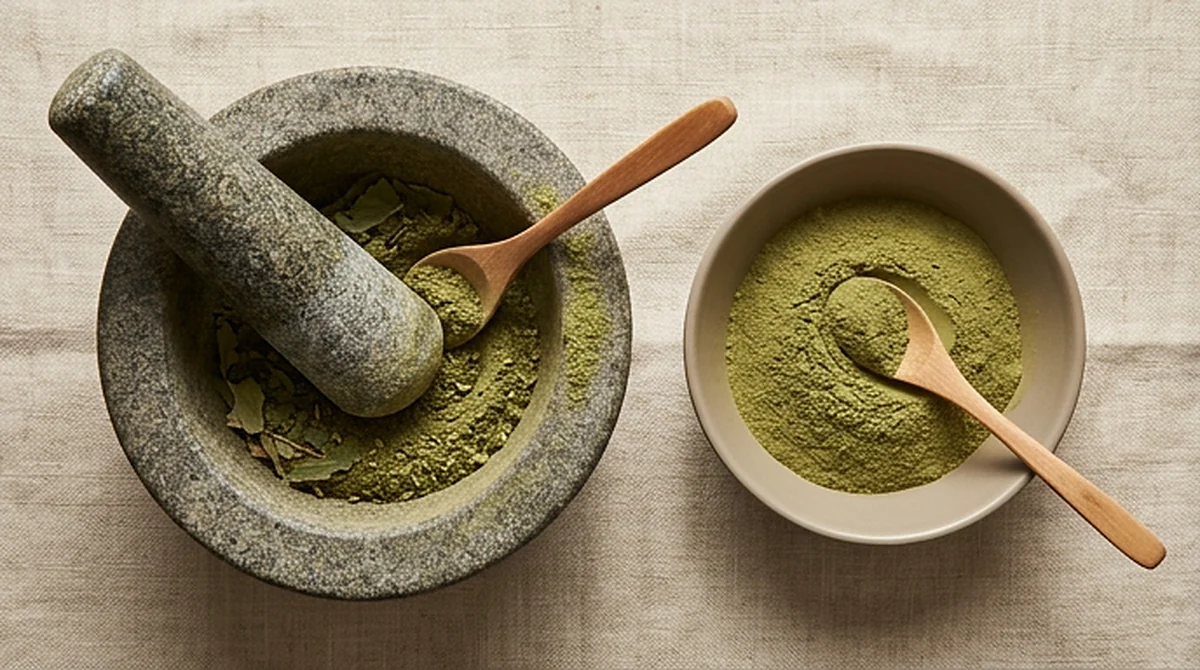
Dried kratom leaf beside a ceramic bowl of fine green powder

After harvest, leaves are dried, cleaned, sorted and ground into a fine powder. The powder is packed loose or filled into capsules.

Drying and leaf maturity are why you see red, green and white labels. Red is typically dried longer and has a deeper, earthier profile, white is lighter and crisper, and green sits in between. Many customers choose based on personal preference and time of day. These colors are not a measure of strength or a promise of any effect.

KratZilla sells Maeng Da only. “Maeng Da” is a Thai term vendors use for a premium grade, not a growing region. Our red vs green vs white Maeng Da guide compares the three side by side.

What are the main compounds in kratom?

Kratom leaves contain dozens of alkaloids. The two most discussed are mitragynine, the most abundant, and 7-hydroxymitragynine (7-OH), which is present only in very small amounts in the leaf.

Researchers report that 7-OH is far more potent than mitragynine and can form in small amounts during drying and processing, or when the body metabolizes mitragynine. That is why regulators draw a line between natural leaf and concentrated or synthetic 7-OH products. KratZilla sells natural kratom leaf powder and capsules only. Our guide to natural kratom leaf vs 7-OH explains the difference.

What forms does kratom come in?

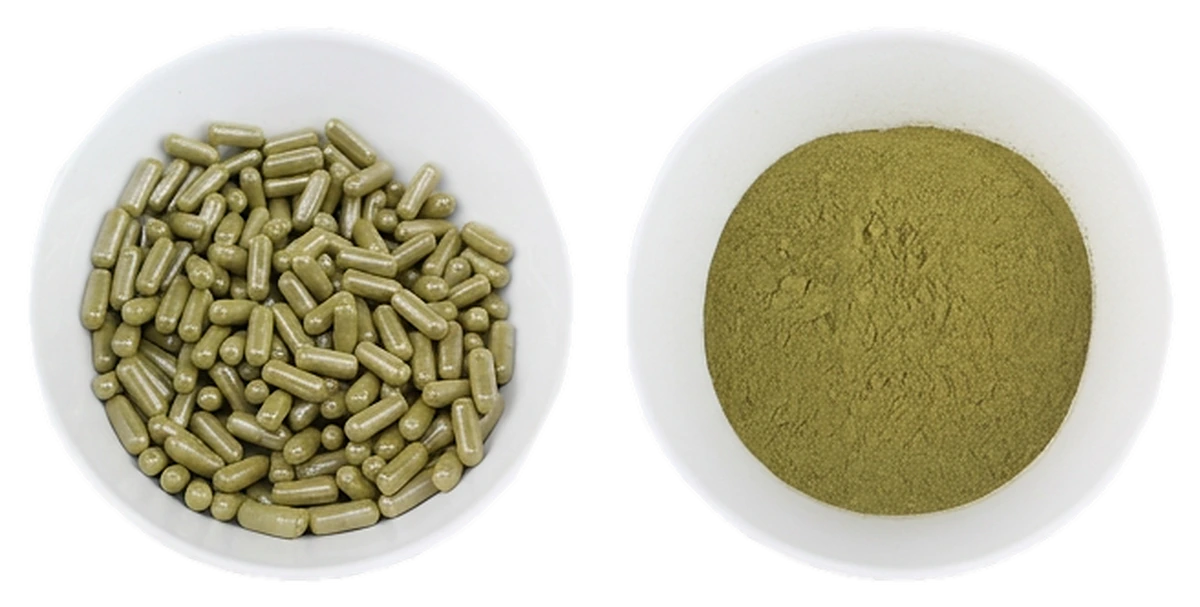
Vegetable capsules and loose powder side by side in ceramic dishes
Form What it is Good to know
Powder Dried leaf, finely ground Flexible, but you need a scale to measure it, and the taste is bitter. Can be mixed into drinks or food, or brewed as tea.
Capsules Powder in a vegetable capsule Pre-measured and tasteless. Each KratZilla capsule holds about 0.6 g (600 mg), so four capsules is about 2.4 g.
Extracts and enhanced products Concentrated or altered kratom products Not sold by KratZilla. A different product category that regulators handle differently.

Our capsules vs powder guide compares the two forms we sell, and how to take kratom covers the practical side.

What is the legal status of kratom?

Kratom’s status depends on the level of government, and it is changing quickly. As of October 1, 2026:

FDA

Kratom is not approved for any use. The FDA says it is not lawfully marketed in the United States as a drug and cannot be lawfully added to conventional foods. The agency has also warned the public about contamination in some products.

Federal scheduling

Natural kratom leaf is not federally scheduled. The DEA has temporarily placed three 7-OH-related compounds in Schedule I (effective August 26, 2026), and its proposal to schedule concentrated 7-OH above a threshold was still pending.

States

Several states ban or restrict kratom, including Alabama, Arkansas, Connecticut, Indiana, Kansas, Louisiana, Massachusetts, Tennessee, Vermont, Wisconsin and Washington, D.C. Some counties and cities add local bans, and some states regulate it under consumer protection laws with 21+ limits. California’s health department has said sale and marketing of kratom and 7-OH for consumption is not permitted under state law.

As of October 1, 2026, we do not ship to jurisdictions that prohibit kratom. Read our kratom laws by state guide and our shipping page before you order.

Laws change often. This section reflects our understanding as of October 1, 2026 and is not legal advice. Check official state and local sources before buying or traveling.

How does kratom compare with kava and coffee?

People often compare kratom with kava and coffee because all three are plants with long histories of traditional use. The table compares facts only.

Kratom Kava Coffee
Plant family Coffee family (Rubiaceae) Pepper family (Piperaceae) Coffee family (Rubiaceae)
Native region Southeast Asia South Pacific islands Tropical regions of Africa and Asia
Part used Leaf Root Seed (bean)
Traditional preparation Chewed fresh or brewed as tea Ground root mixed with water Roasted, ground and brewed
Typical US retail category Leaf powder and capsules, not approved by the FDA for any use Beverages and teas Food and beverage

Sharing a plant family does not mean two plants behave alike. Kratom has a different regulatory status from coffee, which is a common food.

What does the research say so far?

Research on kratom is still developing, and it is mostly laboratory, animal and survey work rather than large human trials. The FDA says there is much that is not known scientifically about kratom, and it has called for more study.

What the literature does describe is useful context. Mitragynine is the most abundant alkaloid in the leaf, and 7-OH is a minor one that is far more potent. The FDA has warned the public that some kratom products were contaminated with Salmonella or concerning levels of heavy metals, which is one reason batch lab reports matter. A 2024 review in Frontiers in Pharmacology also notes that kratom products vary widely and that regulatory standards for purity and labeling are lacking.

We do not make claims about what kratom does for the body. For risks, who should avoid kratom and what is known about dependence, read is kratom safe?.

Getting started: a beginner’s checklist
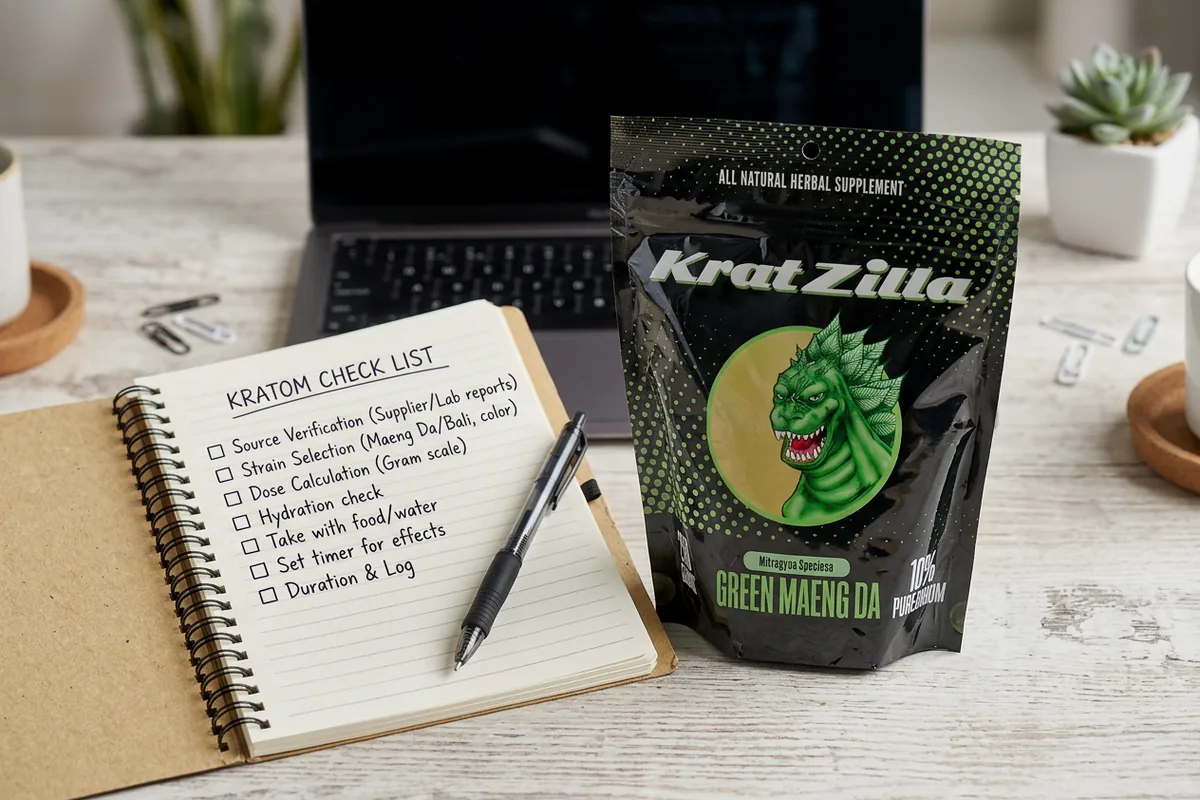
Desk with a notebook and a sealed pouch for a kratom beginner's checklist

If you are new, settle these ten points before you order:

  • Check the law where you live, including state, county and city rules.
  • Confirm kratom is a fit for you. It is not for anyone under 21, anyone pregnant or nursing, or anyone taking medication without talking to a healthcare professional first.
  • Choose natural leaf, not extracts or 7-OH products.
  • Pick a form. Capsules are pre-measured. Powder needs a scale.
  • Pick a vein color. Preference is personal. Many first-time customers start with green.
  • Follow the label serving size and start with a small amount. Never exceed the label serving. Our serving size guide has conversions.
  • Decide how you will take it. Capsules with water, or powder in a drink, food or tea.
  • Plan storage. Airtight container, cool, dry and dark, away from children and pets.
  • Ask for proof of quality. Request batch-level reports from an independent lab. See our lab testing and quality page.
  • Know the limits of what is known. Be wary of any seller that makes medical claims about kratom.

Do not combine kratom with alcohol, other substances or medication, and do not drive or operate machinery until you know how kratom affects you.

Questions

Kratom FAQ

Kratom is made from the leaves of Mitragyna speciosa, a tree native to Southeast Asia. The leaves are dried, cleaned and ground into a powder, which is sold loose or in capsules.

No. 7-hydroxymitragynine is one of many alkaloids present in very small amounts in natural leaf. Concentrated, enhanced and synthetic 7-OH products are a different category that regulators handle differently. KratZilla sells natural leaf only.

It depends on where you live. As of October 1, 2026, several states ban or restrict kratom and some counties and cities add local bans. Check our kratom laws by state guide, and note that laws can change after that date.

Standard 5- and 10-panel workplace screens usually do not test for kratom, but specific tests for mitragynine exist and some employers, courts and recovery programs use them. We cannot promise any test result. Read how long kratom stays in your system.

KratZilla sells to adults 21 and older everywhere. Some states set a different minimum, so confirm the rules where you live.

The leaf is grown in Southeast Asia. We buy from a US-based supplier that we chose after sampling and comparing several suppliers.

Shop this strain

Ready when you are

Natural kratom leaf powder and capsules. Adults 21+ only.

Sources

Accessed October 1, 2026

Written by Andrew Klein.

Last updated: October 1, 2026

These statements have not been evaluated by the Food and Drug Administration. This product is not intended to diagnose, treat, cure, or prevent any disease. Must be 21 or older to purchase. Kratom is not approved by the FDA for any use. Do not use if pregnant, nursing, or taking medication, and consult a healthcare professional before use. Check your state and local laws before ordering.

Article Contents

Subscribe

Get 15% off your first order.

This field is for validation purposes and should be left unchanged.